How is the stone quarried?
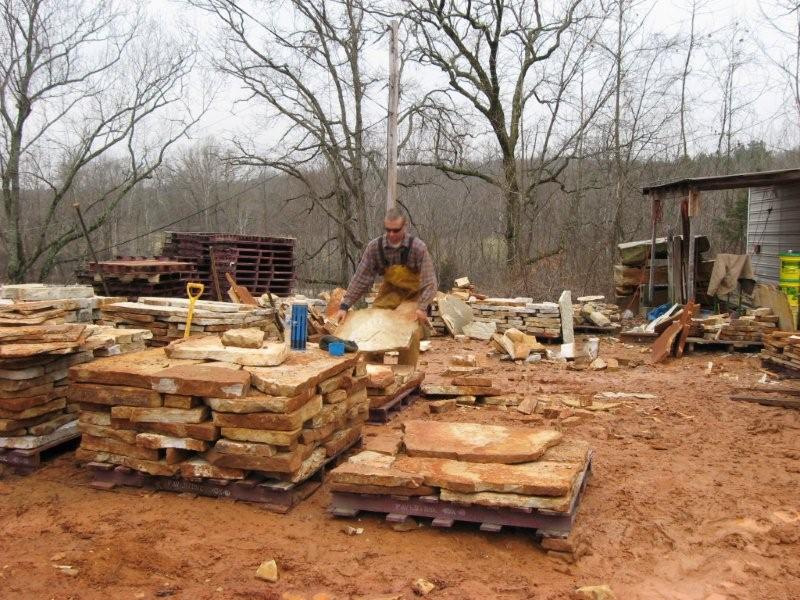
The stone in our quarry is worked largely by hand. After the bedrock is wedged from the bluff
ledge, it is broken down into large stones and split along its natural seams with a hammer and
splitter. Some large rocks with interesting character are left as is or worked into custom products like
monuments, stone benches, and capstones. The rest of the rock is split, sorted, and stacked onto
pallets. Learn more.


Are you looking for?
Arkansas stone ozark stone stone direct from quarry wholesale stone stone for sale stone supplier stone distributer flagstone sandstone native stone natural stone landscape
stone landscaping stone building stone church stone business stone stone siding stone veneer stone monuments sign stones stone engraving engraved stone signs large stones
large flat stone slabs capstones stone bench stone table stone post pillars stone fence hillside steps natural stone steps flagstone steps flagstone patios stone floor
stone veneer stone monuments sign stones stone engraving engraved stone signs large stones large flat stone slabs capstones stone pool decking flagstone walkways stone
sidewalk garden steps
garden path flagstone steppers flower bed stone edging raised bed natural stepping stones fish pond waterfall retaining walls decorative stone walls stone fireplace stone
chimney outdoor living
rock Missouri rock rock quarry rock for sale flag rock hardscape masonry large rock flat rock native rock natural rock rock patio rock walkway rock garden rock fireplace
rock chimney pallets rock skids rock wholesale rock rock supplier rock distributer
Contact Gottschalk Stone Co.- we can help you!
How is sandstone formed?
The sandstone being quarried is thought to be from the Roubidoux formation of Ordivician-age rock
(about 450 million years old). It formed under water from settled sediments in a shallow inland sea.
Will the stone color fade over time?
Yes. The stone will fade/age to gray or a lighter color over time. It depends how much the stone is
exposed to the weather. The reddish stone sandstone will keep its color longer than the white stone.
If you like the color and how it looks when it is wet consider using a water sealant safe for cement
and natural stone.
How big are the individual stones?
Individual stone sizes vary from 6 to 24 inches wide. An average stone is one square foot.
See the Price List for ranges in thickness.
How much stone is on a pallet?
Regardless of layer thickness, 20 cubic feet of stone weighing about 1.25ton (2500 lbs) is stacked on a
pallet.
Which flagstone thickness should I choose for my project?
The thickness you choose will depend on the project you're planning, your physical fitness, and
whether or not you will mortar the stones in, etc.
Can you deliver?
On orders of 6 or less we can deliver your stone (including unloading) for around $75 a pallet to the Saint
Louis area. Truckloads go out weekly during the spring and early summer but more sporadically during
the rest of the year.
If you prefer to pick up your stone order, we will load your pallets on to your truck or trailer free of charge.
How long will I wait for my stone?
If we don't have what you're looking for on-hand, your order will be filled on a first-come
first-serve basis. Wait times can vary from a few days to several weeks based on the size of your
order and the desired color and thickness of stone.
What color is the stone?
The stone comes in a range of earth tones from dark red and orange to grey, tan and buff white.
See Photo Gallery.
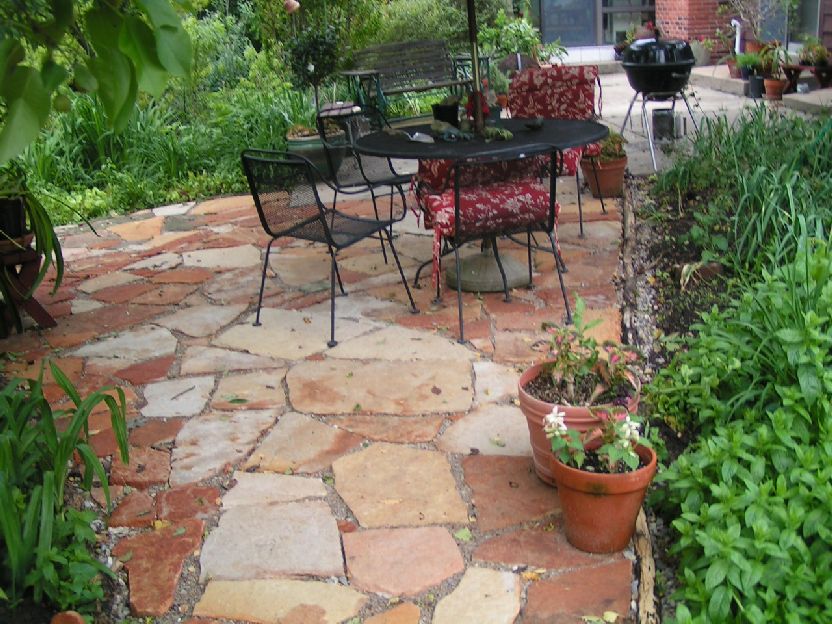
Patios and Walkways - Flat stone work ranges from folks placing stepping stones directly on
the ground to fully mortared projects like pool surrounds. Most of our customers use our two
Thin stone sizes for patios and walkways. When choosing between Thin (1.5-2in) and Thin
(2-3in) keep in mind that the Thin (2-3in) has larger, stronger pieces while the Thin (1.5-2in)
may be a little easier to handle. If you're topping an existing concrete slab and mortaring
stones together, any of our stone thicknesses can be used.
Stacked Walls/Retaining Walls - Any stone thickness can be used for stacked walls, but the
most important factor for a stacked wall is the volume of rock to be used. Each of our pallets
contain the same volume of rock, so the thicker the rock you use the less expensive your
finished wall will be.
To figure out the volume of rock you need, multiply the wall length by the average wall
height by the wall depth.
Example: A 20 ft long 2 feet high wall that is stacked 1 foot deep = 20ft x 2 ft x 1 ft = 40 cu ft
Veneer - All stone thicknesses can be used for veneer on a wall. On structures with a 4-6 inch
brick ledge, our Thick (3-4in) stone is a popular choice. On projects where you want to keep
weight and price at a minimum our Super Thin(1-1.5in) and Ultra Thin(0.5-1in) are excellent
choices.


Is this stone quarried in a environmentally sustainable way?
Our quarry is fully bonded and permitted through the Missouri DNR. As a small 2 acre quarry, we
hand-cut about 300 tons in a year and move very little soil to do so. What soil is eroded during a
heavy rain is protected by a 2-stage sediment trap that prevents soil from leaving the quarry site
and entering Brushy Creek (across the road) and the Black River (0.7 miles downstream). We use
no explosives to quarry our rock and require less than 2 gallons of diesel for each pallet of stone that
leaves our property.
What type of flagstone do you carry?
We only split and sell flagstone from our sandstone quarry. This ensures a quality product that we
stand behind and are proud to sell. Either David or Finn will wedge, cut and stack your stone for
your project. Please see our quarry page for detailed information on how our rock is quarried.
What is flagstone?
Flagstone are large flat slabs or “flags” of quarried stone cut in irregular shaped pieces. Smaller
pieces of flagstone that are less than 16 inches square are often called steppers. Our pallets are mixed
with larger pieces of flagstone and smaller steppers.
Gottschalk Sandstone Quarry
|
Frequently Asked Questions
|